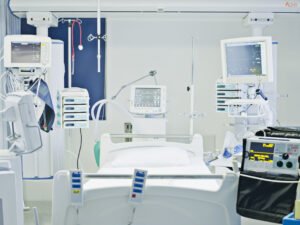

Intensive Care Unit (ICU) is a sophisticated, self-contained facility inside a hospital and is fully equipped with advanced technology to ensure the precise observation, quick intervention and, often, prolonged care of patients suffering from chronic organ malfunction.
The purpose of the ICU is to provide medical care and monitor patients who are in critical situations. The aim of intensified care is to maintain vital functions in seriously affected patients, in order to stop further decline in their health in morbidity, and mortality. For those seeking the best ICU in Ahmedabad, it’s important to choose a facility that combines expert care with advanced technology to support patients through their most critical moments.
What are the different Intensive Care Units (ICUs)?
The pathologies/conditions treated in intensive care units can be categorized (e.g., neurological, trauma, burns, medical, or surgical ICUs) or the patient’s age group (adult or pediatric). The surgical, medical, pediatric as well as neonatal ICU units are examples of special Critical Care Units.
Medical Critical Care Unit
Adults with medical conditions that need regular monitoring, special monitoring as well as the treatment of critical care. The patients who require regular observation, specialized monitoring and critical care treatment are taken care of in the medical intensive treatment unit. Diabetic ketoacidosis and bleeding in the gastrointestinal tract, overdose of drugs and respiratory failure, as well as stroke, sepsis, and cancer are some of the conditions that require it.
Surgical Care Unit:
Patients who have undergone postoperative procedures, like those who’ve undergone significant abdominal surgery, craniotomy patients and thoracotomy patient, as well as unstable multi-trauma patients, as well as all surgical patients who require continuous monitoring or life-sustaining care, are taken care of by the critical care section for surgical patients.
Pediatric Care Unit:
Children who are critically ill receive treatment in the unit for pediatric intensive care. Children who recently underwent surgery or are in danger of deteriorating are also taken care by the unit for pediatric critical care.
Neonatal care unit:
The premature, high-risk and critically ill neonates are taken care of within the intensive neonatal treatment unit. Within the critical care unit for neonatal babies section, infants suffering from genetic diseases and problems with birth are taken care of.
For the highest standard of neonatal care, trust the best ICU in Gota, where advanced facilities and compassionate specialists work together to support your newborn’s health and recovery.
What Is The Type Of Treatment Equipment That Is Used Within An ICU?
The equipment within the ICU is designed to offer life support in addition to support for many organs in the body (for for instance the lungs, kidneys, or the heart). A doctor in intensive care typically is assigned to each patient who examines the equipment and other vital support systems frequently. This includes, but is not restricted to the following:
- Cardiac monitors can be used to monitor vital indicators.
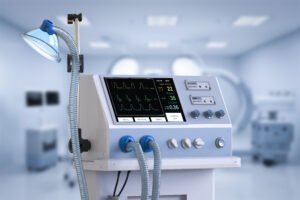
- Ventilator (mechanical)
- Infusion pumps help manage the flow of medications which is controlled by using an infusion pump.
- Syringe pumps can be used for titrating medication to the patient.
- Suction devices
- Oxygen
- BiPAP and CPAP devices are examples of the other machines for respiratory support.
Primarily Treatment Options within an ICU
What Will You Find Within The Intensive Care Unit?
Due to the wires, lines, tubes as well as monitoring equipment the ICU could be intimidating to those who are admitted and the guests.
Patients who are in the intensive care unit may be connected to various equipment, the most common among them is an electronic heart monitor, as well as artificial ventilators (for patients who can’t breathe by themselves).
In the event of a change in health it is when a number of ICU devices beep, and make high-pitched sounds and sirens in order to warn the staff. Contact one of the best ICU in Ahmedabad to know more about these processes.
A number of tubes are also likely to be present providing fluids and other nutrients for the patient, or taking out any other fluids. ICU includes a number of medical professionals.
Is The Intensive Care Unit Recommended For Treatment?
The need for intensive care occurs when one is seriously ill and requires extensive medical treatment in the ICU with close supervision or surgery and requires intensive care.
A majority of patients who are in the intensive care units (ICUs) suffer from the organs they are in. Some may not be able to breathe by themselves as an example.
Some of the main reasons for why the need for an ICU are:
- Severe accident
- Serious health concerns like heart attack
- Major infections like pneumonia
Research shows that nearly 50% of patients receiving treatment at the Intensive Care Unit tend to recuperate and enjoy a better level of living. At Lifeline ICU Hospital, highly trained and dedicated ICU specialists work around the clock to closely monitor patients’ vital functions and provide critical, life-saving care.