
The majority of families don’t consider ICU care in Ahmedabad until they need it. The moment you are standing in the hospital’s corridor with a heart beating, trying to comprehend what a doctor has just said — is not the best chance to make uninformed decisions regarding the intensive treatment.
This guide was created to help you prepare prior to this moment. No matter if a member of the family has a chronic illness of a severe nature or just had a major operation, or recently injured in an accident, being aware of what warning indicators require ICU-level treatment can save their lives. Here at Lifeline ICU Hospital in Ahmedabad Our intensivists face these scenarios each dayWe would like you to be aware prior to a crisis erupts.
What Is ICU Care and Who Actually Needs It?
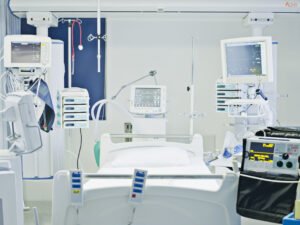
It is the Intensive Care Unit (ICU) is a hospital-specific setting designed for patients who are complex, unstable or life-threatening for them to be properly managed in an ordinary ward. ICU care in Ahmedabad is provided by a high-quality facility is:
- Continuous monitoring, minute-byminute, of all critical systems
- Instant access to equipment for life-support
- Specialised intensivists and critical-care nurses are available 24/7
- Quick response in the event of degradation. Rapid response to any deterioration, usually within seconds
There are not all patients who require the ICU. If certain warning signs are evident, a delay could cause death. Recognising those warning signals are the very first thing any family must do.
7 Warning Signs That Your Loved One May Need ICU Admission
1. Breathing That Is Rapid, Laboured, or Abnormal
If a person’s breathing rate is greater than 30 times a minute with the shoulder or neck muscles clearly struggling to breathe, their respiratory system may be in decline. The effects of severe asthma, ARDS (Acute Respiratory Distress Syndrome) or pulmonary embolism may worsen quickly. ICU treatment with ventilator support could be required within a matter of hours.
What to look out for: gasping, bluish streak around the fingertips or lips (cyanosis), inability to complete a sentence and not having to stop breathing.
2. Persistent Low Blood Pressure or Signs of Shock
A steady drop in blood pressure, in particular when it’s accompanied by rapid heart rate as well as clammy or pale skin, or confusion indicates that the organs of the body aren’t receiving enough blood flow. This is known as shock and is an emergency medical condition.
There are several kinds of shock, including Septic (from a serious infection) or cardiovascular (from the heart failing) and hemorrhagic (from bleeding). Each of them requires ICU-level treatment by continuous monitoring of haemodynamics and specific treatment.
What to look out for is nausea, fainting, sweaty and cold skin, and sudden and extreme weakness.
3. Altered Consciousness or Sudden Confusion
If a person suddenly becomes dizzy, confused, aggressive or unresponsive, especially in the case of people who were previously alert, it’s a serious neurological warning sign. The brain stroke, intracranial haemorrhage, serious infection that enters the brain area, and metabolic issues can cause this.
It is crucial to be punctual for this. In the case of stroke, every minute without treatment equates to approximately 1.9 million neurons destroyed.
What to look out on for: Difficulty in speaking, the ability to recognise family members, sudden inability to move a or the other side, looking in a blank stare or having seizures.
4. Severely High or Uncontrolled Fever
Temperatures above 40C (104F) which does not respond to conventional medication, particularly when it is associated with chills, a rapid heart rate, or low blood pressure, could signal sepsis- an extremely dangerous response to infection. Sepsis may progress into septic shock and multi-organ failure in a matter of hours.
However, sepsis doesn’t always manifest in a dramatic way. Certain patients appear to be sick, then they fall ill quickly.
What to look out for is: an unbroken fever, a warmth that doesn’t break, confusion with high temperatures, extreme cold despite a very high temperature at the core.
5. Acute Kidney Failure or Sudden Drop in Urine Output
If someone stops producing urine or their urine output decreases dramatically, then their kidneys may be suffering from acute kidney failure. This is especially true for people suffering from hypertension, diabetes or recovering from major surgery.
An acute Kidney Injury (AKI) could create toxins in the blood quickly, and can require urgent dialysis, a procedure Lifeline ICU Hospital offers directly within the Critical Care Unit. Find out more details about nephro critical care services and dialysis assistance.
What to look out for: significant reduction in urine production, swelling of the ankles and legs, extreme fatigue, nausea after medical conditions.
6. Chest Pain or Signs of Cardiac Emergency
The sudden and intense chest pain, particularly radiating towards the left arm, jaw or back, could be a sign of an attack on the heart (myocardial infarction). Also, be aware of heart palpitations, sudden fainting or a feeling of imminent end-of-the-world, which can cause fatal arrhythmias.
These issues need Cardiac ICU (CICU) care immediately. Even minute-long delays lower the likelihood of full recovery.
What to look on for: muscle tightening in your chest discomfort radiating down the jaw or arm and a sudden lack of breath at rest, a heartbeat that is racing or fluttering out of control.
7. Major Trauma or Post-Operative Instability
Following a serious accident on the road or fall, or a major surgery, patients may appear stable, but then decline quickly because of internal bleeding, delayed organ failure and post-operative complications. Patients suffering from polytrauma as well as high-risk surgical cases require ICU surveillance to ensure their safety and not only as a reaction to an emergency.
What to look out for is an increase in pain or discomfort after surgery, swelling or bruising that grows, confusion after an accident, and urine that appears reddish or dark.
What Actually Happens When a Patient Is Admitted to the ICU?
Many families feel the ICU environment to be stressful. Here’s what to expect when your loved one is receiving ICU treatment within the Lifeline ICU Hospital:
Step 1: Rapid Assessment As soon as an individual patient arrives the team performs an organised ABCDE assessment -breathing, airway, circulation, Disability (neurological) and Exposure to pinpoint the most pressing dangers promptly.
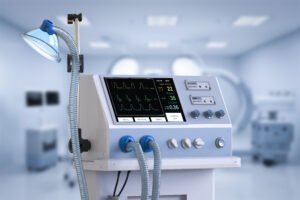
Step 2: Stabilisation In accordance with the evaluation, the patient is stabilized. It could include oxygen therapy as well as support for the ventilator IV fluids, medications to help maintain blood pressure or emergency procedures like central venous catheters.
Step 3: Continuous Monitoring Every ICU bed at Lifeline is equipped with monitors that track blood pressure, heart rate, oxygen saturation, respiratory rate, temperature and more, all the time, 24 hours a day. Any deviation prompts immediate medical review.
Step 4: Multidisciplinary Therapy Our intensivists oversee the treatment, but they also work with cardiologists, pulmonologists, neurologists, nephrologists, dieteticians, and physiotherapists depending on the patient’s needs. There is no one doctor who can handle everything on their own.
Step 5: Family Communication We believe families deserve clear, honest updates. Our team regularly provides updates to ensure that you’re never in the dark about your loved one’s situation. Contact us anytime on 081289 12986.
How to Choose the Right ICU Hospital in Ahmedabad for Your Family
When you are researching the “ICU Hospital near me” make sure you don’t choose the closest one. Consider these issues:
- Do you have an intensivist available 24/7, not only on-call?
- Do you have hospital facilities that are specialised? ICU departments (MICU, CICU, NICU, PICU, SICU)?
- Are dialysis, radiology, or pharmacy services available? Do patients need to travel to another location?
- Does the hospital accept cashless medical claim to break down financial obstacles at the most inconvenient possible moment?
- How is the nurse-to-patient ratio within the ICU?
Lifeline ICU Hospital satisfies every one of these requirements. The 20-bed multispeciality hospital has fully-equipped ICU, ICCU, and CCU units that have on-site radiology, dialysis, pharmacy, and radiology all in one location, located on New SG Road, Ahmedabad.
For a more in-depth analysis of what makes a quality ICU from one that is top-quality, check out our guide to how to choose the Best ICU in Ahmedabad. If you’re experiencing an emergency situation right now go to the Emergency Hospital in Ahmedabad page to get immediate help.
Conclusion: Knowledge Is the First Step in Critical Care
Being aware of the warning signs that call for ICU care in Ahmedabad isn’t about being optimistic It’s about being prepared. Families who are aware of what to look out for, and who to contact will give their loved ones the best chance of survival in the event of a crisis.
The staff at Lifeline ICU Hospital we are more than just a hospital we are your companion in the toughest moments life may bring. Our experienced staff of specialists, intensivists and nurses is available all hours of the day to offer you with the ICU care in Ahmedabad you and your family deserve.
Don’t just wait for the worst to occur before you know the best way to proceed.
Talk to Our ICU Specialists — Any Time, Day or Night
Lifeline ICU Hospital | 24/7 Emergency & ICU Helpline: +91 81289 12986